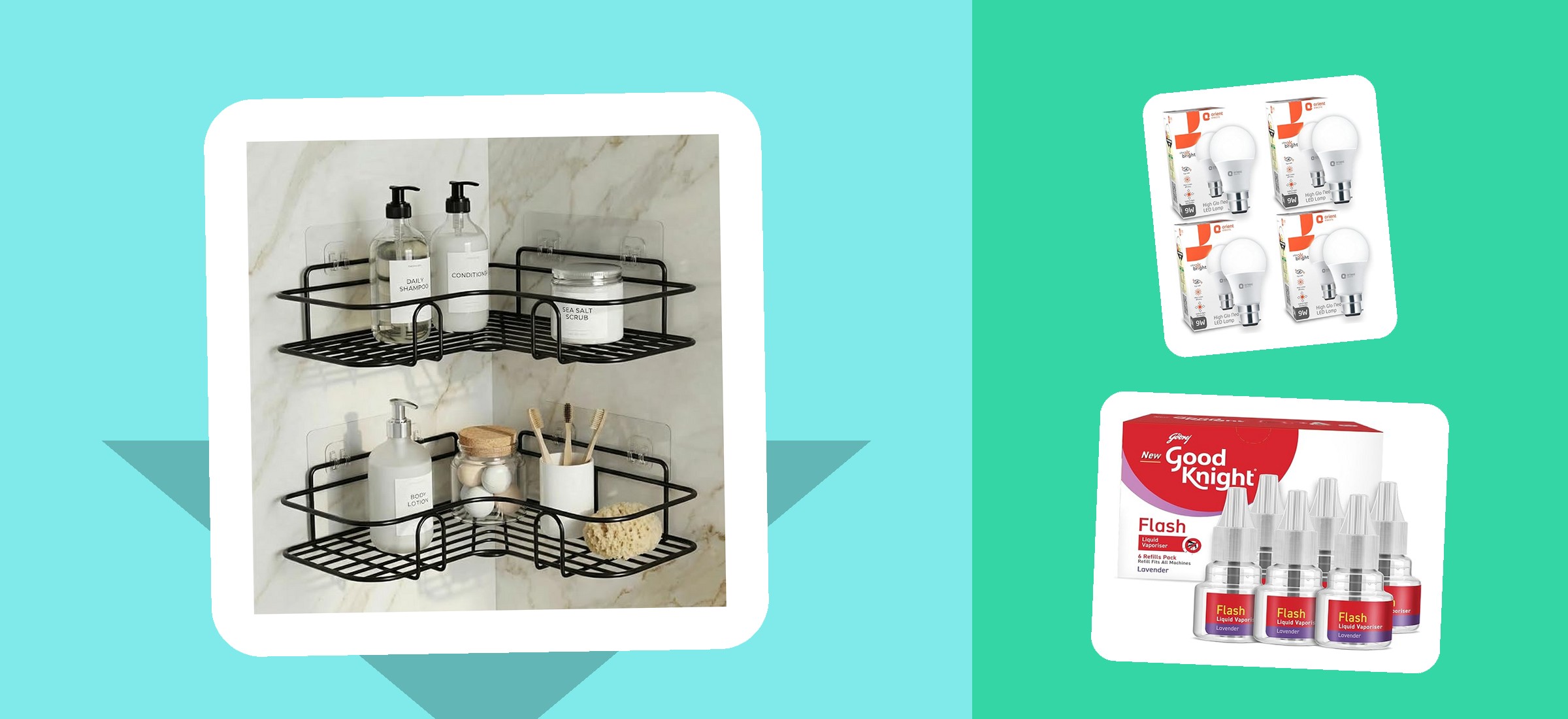
![A colour-blocked banner showing assorted products from the Amazon catalogue, illustrating a page about Amazon's creator and influencer programme in India]()
Amazon India has moved its creator commissions onto the platforms people were already scrolling. Its post of 19 October 2026 announces that Amazon has joined the YouTube Shopping affiliate programme, that Pinterest Pins can now carry an Amazon affiliate link automatically, and that a Canva app can publish shoppable designs straight to an Amazon Storefront. The number worth stopping on is not about platforms at all: Amazon says "about 75% of creators" in its programmes come from non-metro India, and "nearly 70% of shoppers" buying through them do too. What the post never names is the commission rate.
📅 Update log:
16 November 2026: first published. Source is Amazon India's own newsroom post, "Amazon creators can earn through YouTube and Pinterest in India. Here's how", at aboutamazon.in, published 19 October 2026 (datePublished 2026-10-19T09:49:45Z) and read on 16 November 2026 from India, logged out, with nothing bought. Every figure, quotation and step is verbatim from that post. One discrepancy is reported rather than resolved: the article body says the Influencer Program has grown to 2 lakh creators, while an inline related-story card on the same page says 1.25 lakh. Nothing was tested: no programme was joined, no product was tagged and no earnings were observed.
What Amazon actually announced
Amazon has joined the YouTube Shopping affiliate programme in India and added automatic affiliate linking on Pinterest. In its own words, eligible creators can now tag Amazon products "on two of the places audiences already turn to for inspiration" — and "when a viewer taps a tag, they can explore the product and complete their purchase on Amazon.in, and the creator earns a commission on qualifying purchases". Published 19 October 2026. No commission rate is named anywhere in the post.
The change is about location, not mechanism. The Amazon Influencer Program already paid commissions; what moved is where the tagging can happen. Instead of sending an audience to a storefront link, a creator can tag the product inside the YouTube video or the Pin itself.
Amazon's own quoted rationale for YouTube comes from YouTube. Gunjan Soni, Managing Director – India, YouTube, is quoted saying "Over 450 million people in India have shopping-related searches on YouTube, and this partnership lets creators easily tag millions of items across Shorts, long-form videos, and livestreams".
The three surfaces, and how Amazon says you start on each
| Surface | What it does | Amazon's stated steps |
|---|
| YouTube | Tag Amazon products across Shorts, long-form videos and livestreams. Viewer taps the tag, buys on Amazon.in, creator earns on qualifying purchases. | Sign in to YouTube Studio, open the Earn tab, find the YouTube Shopping affiliate programme under Programs and select Join Now. Then tag products and track tags, insights and earnings in one place. |
| Pinterest | Connect an Amazon Storefront once; "from then on their affiliate link is applied automatically whenever they tag an eligible Amazon product on a Pin". The Storefront handle also appears on the Pinterest profile. | Securely connect the Amazon Storefront to the Pinterest account, tag Amazon products on Pins, and showcase the Storefront on the profile. |
| Canva | The Amazon Creators app lets eligible creators search Amazon products, drop them into designs and publish straight to a Storefront. Product images get background removal applied automatically. | In the Canva editor, click Apps, search "Amazon Creators" and install. Connect the Amazon Influencer account, pick a country, add products, export and publish to the Storefront. |
Two Canva caveats Amazon states plainly: "no Canva Pro membership required", and "for now, the app publishes static images and photos to your Storefront — video isn't supported yet". Existing Canva Pro templates do still work.
The figure that actually surprises: where the money is coming from
"Nearly 70% of shoppers buying through Amazon's creator programs are from non-metro cities such as Guntur, Dehradun, Bhubaneshwar and Patiala, and about 75% of creators themselves come from non-metro India, including Kanchipuram, Meerut, Jammu and Nashik." "Earnings per creator have grown 60% year-over-year."
That is the part of the announcement worth keeping. Creator commerce in India is usually discussed as a metro phenomenon, and Amazon's own numbers describe roughly three quarters of its participating creators and seven tenths of the resulting shoppers sitting outside the big cities.
The named towns are Amazon's own examples — Guntur, Dehradun, Bhubaneshwar and Patiala on the buying side; Kanchipuram, Meerut, Jammu and Nashik on the creating side. None of these figures has been independently verified here, and Amazon does not publish the underlying methodology.
Pinterest's case, in Amazon's framing
- "Pinterest is a place people come to with intent." Amazon's stated reason for the integration.
- "More than half of Pinterest users visit to shop."
- "The platform sees over 80 billion searches a month."
- The mechanical advantage is the automatic linking. Connect the Storefront once and the affiliate information is applied whenever an eligible product is tagged — no per-Pin link building.
What the announcement does not tell you
Four gaps, and one number that contradicts itself
No commission rate appears anywhere in the post. Amazon says a creator "earns a commission on qualifying purchases" and never says how much, or how rates differ by category. No figure is stated or estimated on this page either.
"Eligible" is never defined. The word appears repeatedly — eligible creators, eligible Amazon products — without criteria, thresholds or an application route beyond the platform steps quoted above.
"Qualifying purchases" is never defined either. Returns, cancellations, cookie windows and excluded categories are the ordinary fine print of any affiliate programme and none of it is in this post.
One scale figure contradicts itself on the same page. The article body states that "the Amazon Influencer Program has grown to 2 lakh creators, doubling year-on-year". An inline related-story card on the same page reads "Amazon India's creator ecosystem has grown to 1.25 lakh creators earning through the Influencer Program, Amazon Live, and Creator Central". Both are reproduced here because both are published by Amazon; neither is independently verified, and the related card is likely the older of the two. It is flagged rather than quietly resolved.
Amazon also names supporting programmes without detailing them: Creator Rewards, described as "scaled, performance-based incentives", and Creator Connections. Amazon states that creators "have helped close to 40 million customers shop on Amazon.in" this year.
If you are thinking about joining
- Read the programme's own terms before the announcement. The commission rate, the cookie window and the excluded categories are the numbers that decide whether this is worth your time, and none of them is in Amazon's post.
- Check what "eligible" means for your account. Amazon uses the word throughout without defining it; the Influencer Program's own enrolment pages are the place that answers it.
- Expect the Canva route to be images only for now. Amazon states video is not yet supported.
- Treat the growth figures as Amazon's own. The 2 lakh creators, the 60% earnings growth and the non-metro splits are unverified here, and one creator-count figure on the page disagrees with another.
- Nothing on this page is a recommendation to join, and no income claim is made or implied. Earnings in any affiliate programme depend on audience, category and terms that Amazon has not published here.
Frequently Asked Questions
Can Indian creators earn Amazon commissions on YouTube now?
Yes — Amazon says it has joined the YouTube Shopping affiliate programme in India. Its announcement of 19 October 2026 states that eligible creators can tag Amazon products "across their YouTube content—Shorts, long-form videos and livestreams", and that "when a viewer taps a tag, they can explore the product and complete their purchase on Amazon.in, and the creator earns a commission on qualifying purchases". Amazon's stated steps: sign in to YouTube Studio, open the Earn tab, find the YouTube Shopping affiliate programme under Programs and select Join Now. No commission rate is named anywhere in the post, and none is stated here.
How does the Amazon Pinterest affiliate linking work?
You connect your Amazon Storefront to your Pinterest account once, and after that the linking is automatic. Amazon's wording: "Creators connect their Amazon Storefront to their Pinterest account once and from then on their affiliate link is applied automatically whenever they tag an eligible Amazon product on a Pin." The Storefront handle is also featured on the Pinterest profile. Amazon's stated reason for choosing Pinterest is intent: it says "more than half of Pinterest users visit to shop" and that the platform "sees over 80 billion searches a month". Those are Amazon's figures, reproduced rather than verified.
What commission does Amazon pay its creators in India?
Amazon does not say, anywhere in this announcement. The post repeatedly uses the phrase "a commission on qualifying purchases" without stating a rate, a category breakdown, a cookie window or what disqualifies a purchase. No rate is stated or estimated on this page, because doing so would be inventing a number Amazon has not published. The terms of the Amazon Influencer Program itself are where that answer lives, and they are what anyone deciding whether to join should read. Amazon does say that "earnings per creator have grown 60% year-over-year" — a growth rate, not an amount.
Is Amazon's creator programme mostly a metro thing in India?
Amazon's own figures say the opposite. Its post states: "Nearly 70% of shoppers buying through Amazon's creator programs are from non-metro cities such as Guntur, Dehradun, Bhubaneshwar and Patiala, and about 75% of creators themselves come from non-metro India, including Kanchipuram, Meerut, Jammu and Nashik." Roughly three quarters of participating creators and seven tenths of the resulting shoppers sit outside the big cities, on Amazon's numbers. Amazon also says the Influencer Program has grown to 2 lakh creators, doubling year-on-year, and that creators have helped close to 40 million customers shop on Amazon.in this year. None of these figures is independently verified here and Amazon publishes no methodology.
What is the Amazon Creators app on Canva?
A Canva plug-in that makes a design shoppable without leaving Canva. Amazon says eligible creators can "search for Amazon products and drop them straight into their designs, then export and publish the finished content directly to their Amazon Storefront", with product images getting background removal applied automatically. Two limits Amazon states outright: "no Canva Pro membership required", and "for now, the app publishes static images and photos to your Storefront — video isn't supported yet". To install it: click Apps in the Canva editor's left toolbar, search "Amazon Creators", then connect your Amazon Influencer account and pick your country.
Prices & codes last verified: November 16, 2026
Figures and descriptions quoted from Amazon India's newsroom post of 19 October 2026, read on 16 November 2026. Nothing here was tested: no programme was joined, no product was tagged and no earnings were observed. Amazon names no commission rate, no eligibility criteria, no cookie window and no definition of a "qualifying purchase" anywhere in the post, and none of those is stated or estimated on this page. This is not a recommendation to join any programme, and no income claim is made or implied — affiliate earnings depend on audience, category and terms Amazon has not published here. The scale and geography figures are Amazon's own and are not independently verified; its creator count appears on the same page as both 2 lakh and 1.25 lakh, and that conflict is flagged rather than resolved. Anyone considering joining should read the Amazon Influencer Program's own terms, and the YouTube, Pinterest and Canva terms, before relying on anything summarised here. No claim is made that Amazon has acted improperly.


 Booking com
 Hostinger
 Dell
 Udemy
 Agoda
 Nykaa
 Myntra
 Ajio