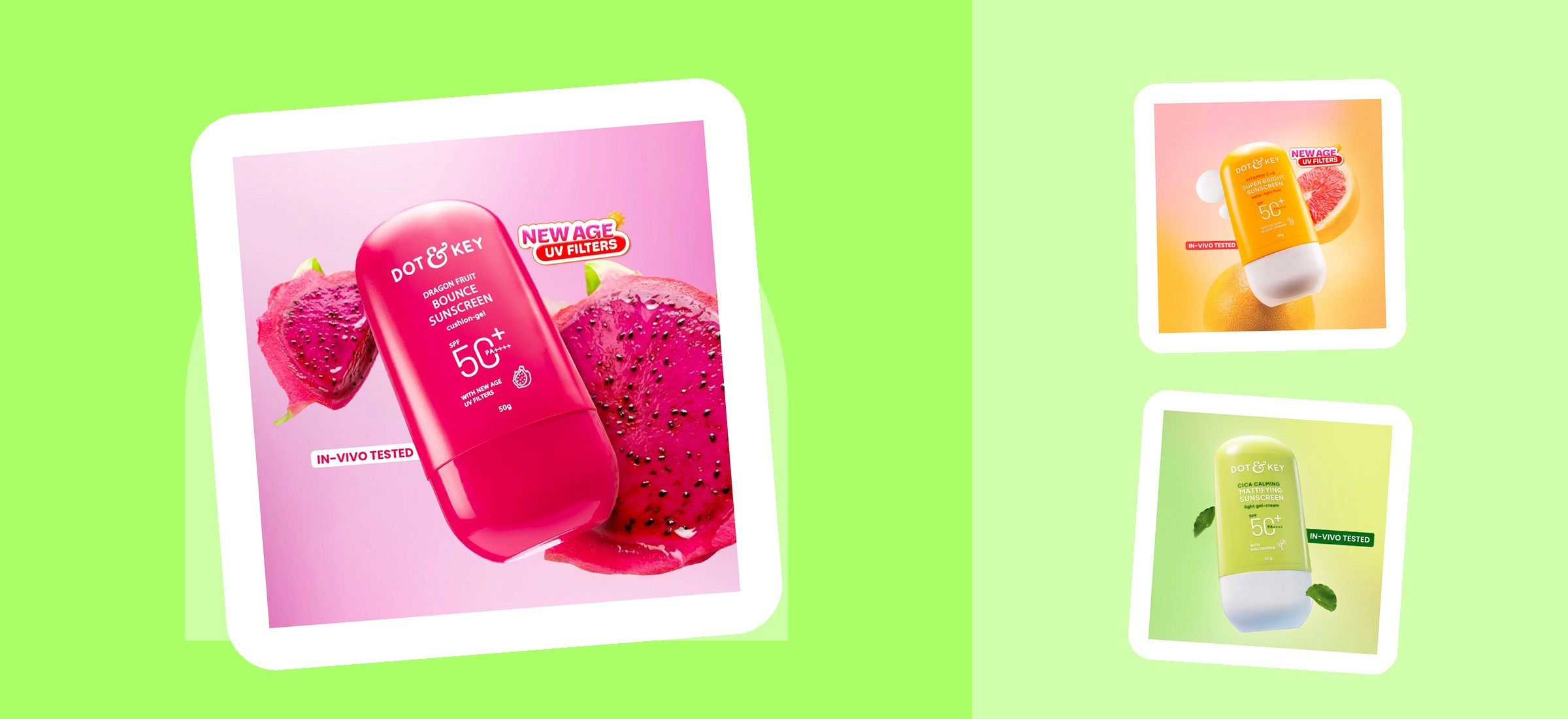
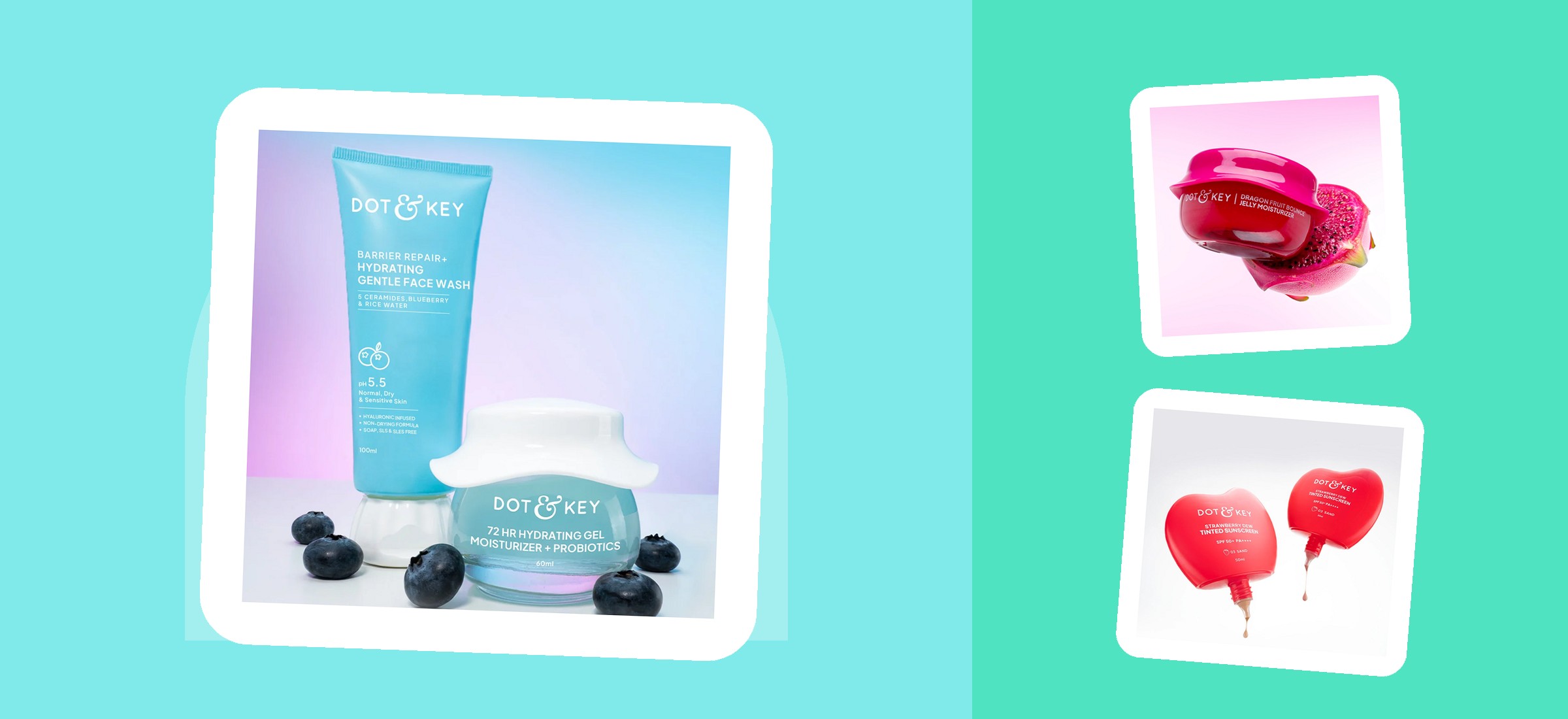
![Dot & Key skincare products of the kind bought by the customers this privacy policy governs, shown in the brand's own product photographs]()
Dot & Key sells face serums and sunscreens. Its privacy policy says users registering on the site are required to provide, among other things, "medical records and history", "sexual orientation" and "biometric information". That is the published text, quoted exactly.
It is also boilerplate — the full list of categories the IT Rules, 2011 define as sensitive personal data, copied into the document, and the signup form asks for none of them. This page explains why that still matters, then reads the clauses that genuinely bind: the parent who compensates for a minor's order, the sharing sentence printed without a limiting word, the liability excluded if your data is breached — and the two things this policy does better than any of the four it was read against. Published text only; nothing here is legal advice.
Verbatim, from Dot & Key's own privacy policy
Read 10 October 2026 on dotandkey.com/policies/privacy-policy
"users are required to provide certain information for theregistration process namely: ... g) medical records and history h) sexual orientation, i) biometric information, j) password etc."
📅 Update log:
10 October 2026 — First publication. Dot & Key's privacy policy read in full from dotandkey.com/policies/privacy-policy: the electronic-record statement under the Information Technology Act, 2000, the no-signature-required clause, the legally-binding-document statement naming Bare Wellness LLP, the construction clause citing the Information Technology (reasonable security practices and procedures and sensitive personal data of information) rules, 2011, the read-carefully and consent-by-use paragraph, the change-at-any-time-without-notice clause and its continued-use acceptance sentence, the blanket consent paragraph and its no-loss-or-wrongful-gain undertaking, the USER INFORMATION registration list from (a) name through (j) password including medical records and history, sexual orientation and biometric information, the service-dependent qualifier and its advertising-services and new-services purposes, the public-domain and Right to Information Act, 2005 carve-out on what counts as sensitive, the product-interests clause covering present and future affiliates, the adults-only paragraph and the parent-or-guardian compensation sentence, the COOKIES section and its User Identification sentence, the IP-address paragraph and its geographic-location use, the LINKS TO THE OTHER SITES carve-out, the INFORMATION SHARING sentence and its two limbs covering legal compulsion and group companies with the flow-down obligation, the INFORMATION SECURITY paragraph and the exclusion of liability for unauthorised access or misuse by third parties, the interception caveat, the discussion-areas warning, the Firepush SMS and email consent paragraph including the five-per-week cap and the STOP and HELP instructions, and the Grievance Redressal section naming the Customer Support Team, Bare Wellness LLP, 2/5 Sarat Bose Road, Kolkata 700 020, customercare@dotandkey.com and 033-4602-6700/6701/6702. Compared the same morning against the privacy policies of Beardo, Minimalist, SuperBottoms and Neemans. Policy verified 10 October 2026.
What the registration list actually says
Dot & Key sells face serums, sunscreens and moisturisers. Its privacy policy's section headed USER INFORMATION opens like this, reproduced exactly including its spacing:
"To avail certain services on our Websites, users are required to provide certain information for theregistration process namely: - a) your name, b) email address, c) sex, d) age, e) PIN code, f) credit card or debit card details g) medical records and history h) sexual orientation, i) biometric information, j) password etc., and / or your occupation, interests, and the like."
Medical records and history. Sexual orientation. Biometric information. On a skincare site. That is what the document says users are required to provide to register.
Now the part that matters more than the shock, and this page is not going to pretend otherwise: that list is not a description of a Dot & Key signup form. It is the full set of categories defined as "sensitive personal data or information" in Rule 3 of the Information Technology (Reasonable Security Practices and Procedures and Sensitive Personal Data or Information) Rules, 2011 — passwords, financial information, health and medical records, sexual orientation, biometrics — copied wholesale into a privacy policy. It appears in a great many Indian e-commerce privacy policies and it is near-universal in templates of this vintage. Creating an account on dotandkey.com does not ask you for your sexual orientation or a fingerprint, and nothing on this page says it does.
So why does the superset matter?
Because a privacy policy is not a description of a form. It is the document that defines the boundary of what a company has told you it may collect, and what you have consented to by using the site. The policy says so itself, two paragraphs earlier: "By providing us your Information or by making use of the facilities provided by the Website, You hereby consent to the collection, storage, processing and transfer of any or all of Your Personal Information and Non-Personal Information by us as specified under this Privacy Policy."
The document does carry a qualifier, and it is the sentence that does the real work: "All required information is service dependent and we may use the above said user information to, maintain, protect, and improve its services (including advertising services) and for developing new services." That is the clause which turns the list from a demand into a ceiling. Note what else is in it: the permitted uses include advertising services and developing new services, which is broader than fulfilling your order.
There is also a definitional carve-out worth reading twice: "Such information will not be considered as sensitive if it is freely available and accessible in the public domain or is furnished under the Right to Information Act, 2005 or any other law for the time being in force." That too is lifted from the 2011 Rules.
And the policy adds a collection route that is not a form at all: "A record of your product interests may also be maintained and/or acquired about you from our present and/or future affiliates." Acquired about you — from affiliates that may not exist yet.
If a minor uses the site, the parent compensates
The minors paragraph starts conventionally and does not end that way. "This Website is directed to be used by adults only who are above the age of 18 years. If you are not an adult, while you may look at our Site, but you should not make a purchase, register, or submit personal information to us. We do not knowingly collect information from minors.Minors should not be using this website with any personal information." The missing space before "Minors" is the source page's.
Then: "In an event of default by the minor, the parent or the guardian will be liable to compensate for whatsoever damages arising out of such wrongful use by the minor."
A liability-shifting clause is an ordinary thing for a website to write and it is not unusual drafting. It is worth flagging for one practical reason: skincare is a category teenagers buy heavily, and a parent whose fifteen-year-old orders a serum on the family card has, on the face of this document, accepted an open-ended compensation obligation for "whatsoever damages". Whether such a clause would be enforced is a question for a court and not for this page.
The sharing sentence, exactly as it is printed
The section headed INFORMATION SHARING opens with this sentence: "We share the sensitive personal information to any third party without obtaining the prior consent of the user in the following limited circumstances:"
Read as printed, that says sensitive personal information is shared without consent. The two limbs that follow make the intended meaning clear, and they are narrow:
"(a) When it is requested or required by law or by any court or governmental agency or authority to disclose, for the purpose of verification of identity, or for the prevention, detection, investigation including cyber incidents, or for prosecution and punishment of offences." That is compelled disclosure, which every company is subject to.
"(b) We proposes to share such information within its group companies and officers and employees of such group companies for the purpose of processing personal information on its behalf. We also ensure that these recipients of such information agree to process such information based on our instructions and in compliance with this Privacy Policy." That is intra-group processing with a flow-down obligation attached.
Both limbs are ordinary and the flow-down commitment in (b) is a good thing. The observation here is about drafting only: the opening sentence as published does not contain a limiting word such as "only", so the sentence reads more broadly than the two circumstances it introduces. This page reports the text as printed and makes no claim about what Dot & Key actually does with anyone's data.
| What a privacy policy should answer | What Dot & Key's policy states | Note |
|---|
| Operating company | Bare Wellness LLP | Named clearly |
| Legal basis cited | Information Technology Act, 2000 and the SPDI Rules, 2011 | Indian law, correctly cited |
| What is collected | name, email, sex, age, PIN code, card details, "medical records and history", "sexual orientation", "biometric information", password, occupation, interests | The full SPDI superset |
| Qualifier on that list | "All required information is service dependent" | Ceiling, not a form |
| Permitted uses | "maintain, protect, and improve its services (including advertising services) and for developing new services" | Includes advertising |
| Data from elsewhere | product interests "acquired about you from our present and/or future affiliates" | Not collected from you |
| Consent model | "By using the Website, you indicate that you understand, agree and consent" | Browse-wrap |
| Sharing without consent | "in the following limited circumstances" — legal compulsion, and group companies | Two limbs only |
| Flow-down on sharing | recipients "agree to process such information based on our instructions" | Committed |
| Selling data | not addressed — no sale clause either way | No explicit no-sale promise |
| Minors | "directed to be used by adults only who are above the age of 18" | Adults only |
| If a minor orders | "the parent or the guardian will be liable to compensate for whatsoever damages" | Open-ended |
| Cookies | assigns "a unique, random number as a User Identification (User ID)" | Browser blocking is the route |
| IP address | collected automatically; "Your IP address does not identify you personally" | Used for geographic targeting |
| Security measures | "internal reviews", "appropriate encryption and physical security measures" | Described in general terms |
| If there is a breach | "we shall not be liable to any user for any loss, damage ... due to the unauthorized access or misuse" | Liability excluded |
| Marketing frequency | "Not more than 5 SMS messages or emails per week" | A stated cap, which is rare |
| Marketing opt-out | "Reply STOP to unsubscribe. Text HELP for help" | Standard |
| Retention period | not stated anywhere in this document | Absent |
| Right to delete | not addressed anywhere in this document | Absent |
| DPDP Act, 2023 | not mentioned | Absent |
| Changes to the policy | "subject to change at any time without notice"; continued use is acceptance | No notification |
| Grievance route | Customer Support Team, Bare Wellness LLP, 2/5 Sarat Bose Road, Kolkata 700 020, customercare@dotandkey.com, 033-4602-6700/6701/6702 | Most complete of the five read |
What it does better than the others
Two things, and both are genuinely better than what the comparison set offers.
The grievance route is complete. Under "Grievance Redressal" the page gives a named team, the operating entity Bare Wellness LLP, a full postal address at 2/5 Sarat Bose Road, Kolkata – 700 020, the email customercare@dotandkey.com and three phone numbers. Of the five D2C privacy policies read on 10 October, this is the most complete escalation path. Beardo's page names no officer at all.
The marketing frequency is capped on the page. The SMS consent paragraph states that "Firepush on behalf of Dot & Key may use automated means to send recurring mobile messages/emails" and then commits: "Not more than 5 SMS messages or emails per week." A stated numeric cap is unusual — most policies promise "periodic" messages and leave it there — and naming the vendor, Firepush, is more transparent than most.
Five a week is still a lot of messages. But a number you can hold a company to is worth more than an adjective you cannot.
What is missing, and what to do about it
No retention period. Nothing in the document says how long Dot & Key keeps your name, order history, card details or anything else. No deletion right — there is no erasure procedure, no timeline and no contact route specific to it. No reference to the Digital Personal Data Protection Act, 2023, which is India's current data law; the document is framed entirely on the Information Technology Act, 2000 and the 2011 Rules.
And no no-sale clause. The policy does not say it sells your data and there is nothing here suggesting it does — but unlike Beardo's page, which states "We will not sell, distribute or lease your personal information to third parties", this document simply does not address the question.
If you want your data, corrected or removed, the address to use is customercare@dotandkey.com, and the grievance section is the part of the document that entitles you to a response. Nothing on this page is legal advice, and nothing here says Dot & Key has breached any law or would refuse any request. This describes a published document as it stood on 10 October 2026; the policy states it may change at any time without notice.
Frequently Asked Questions
Does Dot & Key collect your medical records and biometric data?
Its privacy policy lists them. The registration section states users are required to provide "a) your name, b) email address, c) sex, d) age, e) PIN code, f) credit card or debit card details g) medical records and history h) sexual orientation, i) biometric information, j) password". That list is the full set of "sensitive personal data or information" categories defined in the IT Rules, 2011, copied into the policy, and it appears in a great many Indian e-commerce privacy policies. The document adds "All required information is service dependent", and creating an account on dotandkey.com does not in practice ask for a fingerprint or your sexual orientation. This page does not claim the brand collects biometrics. It reports that the published document names them as things a user may be required to provide, which is what a privacy policy is for.
Who is liable if a child orders from Dot & Key?
On the face of the document, the parent. The policy states the site is "directed to be used by adults only who are above the age of 18 years" and that "In an event of default by the minor, the parent or the guardian will be liable to compensate for whatsoever damages arising out of such wrongful use by the minor." Liability-shifting clauses of this kind are ordinary drafting and nothing here suggests otherwise; whether one would be enforced in any particular case is a matter for a court, not for a shopping page. It is worth knowing because skincare is a category teenagers buy heavily.
Does Dot & Key share your data with other companies?
In two stated circumstances. The policy's INFORMATION SHARING section names legal or governmental compulsion, and sharing "within its group companies and officers and employees of such group companies for the purpose of processing personal information on its behalf" — with a commitment that those recipients "agree to process such information based on our instructions and in compliance with this Privacy Policy". Separately, the policy says a record of your product interests "may also be maintained and/or acquired about you from our present and/or future affiliates". The document contains no clause either promising or denying that data is sold.
How many marketing messages can Dot & Key send?
The policy states a number, which is unusual. Its SMS consent paragraph says Firepush, on Dot & Key's behalf, "may use automated means to send recurring mobile messages/emails" and that "Additional mobile messages/emails may be sent periodically based on your interactions with us. Not more than 5 SMS messages or emails per week." To stop them: "Reply STOP to unsubscribe. Text HELP for help", or use the unsubscribe link. Most privacy policies read this month promise "periodic" messages without any cap at all, so a stated figure is a point in this one's favour even if five a week is a lot.
Who do I complain to about privacy at Dot & Key?
The policy gives the most complete grievance route of the five D2C privacy pages read on 10 October 2026. Under "Grievance Redressal" it names the Customer Support Team, Bare Wellness LLP, 2/5 Sarat Bose Road, Kolkata – 700 020, with the email customercare@dotandkey.com and phone numbers 033-4602-6700, 6701 and 6702. The section covers "Any complaints, abuse or concerns with regards to content and or comment or breach of these terms". By comparison, Beardo's privacy policy names no officer or address at all.
Prices & codes last verified: October 10, 2026
Zoutons may earn a commission when you buy through links on this page. Every quoted sentence, clause and detail here was read on 10 October 2026 from dotandkey.com/policies/privacy-policy, logged out, in India, with nothing purchased, no account created, no order placed, no registration form completed, no data request submitted and customer service not contacted; the comparison with four other brands' privacy policies was made by reading those pages the same morning in the same way. Quotations are reproduced verbatim from Dot & Key's own page, including its own spelling, grammar, spacing, capitalisation and punctuation — the missing spaces in "theregistration" and "minors.Minors", and the wording "We proposes", are the source page's — and any apparent error inside a quotation is the source page's rather than ours and is reproduced rather than corrected. The page states it is subject to change at any time without notice, so the document described here may already differ from the one that applies to you; the policy shown on dotandkey.com prevails over anything on this page. This page describes a published privacy policy. It does not assess, and expresses no view on, whether that policy or any clause in it is valid, binding, adequate, fair or enforceable, nor whether the document or Dot & Key's actual data practices comply with the Digital Personal Data Protection Act, 2023, the Information Technology Act, 2000, the Information Technology (Reasonable Security Practices and Procedures and Sensitive Personal Data or Information) Rules, 2011, the Indian Contract Act, the Consumer Protection Act or any rules made under them — all of which are matters for a court, a consumer forum, the Data Protection Board of India or another regulator, and not for a shopping page. Nothing on this page is legal, data-protection, compliance or regulatory advice or a substitute for advice from a qualified professional. The registration list quoted above, including the words "medical records and history", "sexual orientation" and "biometric information", is reproduced from the published policy because that is what the document states. It is expressly NOT a statement that Dot & Key or Bare Wellness LLP collects, requests, requires, stores, processes or has ever held any customer's medical records, health data, sexual orientation or biometric information; the list corresponds to the categories defined as sensitive personal data or information in the IT Rules, 2011, appears in many Indian e-commerce privacy policies, and the policy itself qualifies it with "All required information is service dependent". No allegation of excessive, unlawful or improper data collection is made or implied. The observation that the INFORMATION SHARING sentence as printed does not contain a limiting word is an observation about drafting only. It is not a statement that Dot & Key shares sensitive personal information without consent, that it has done so, or that it would; the two limbs the sentence introduces are compelled legal disclosure and intra-group processing with a flow-down obligation, both of which are ordinary and lawful. Reporting that a published policy does not state a retention period, a deletion right or a no-sale commitment, or that it excludes liability for unauthorised third-party access, is a description of what the document contains; it is not an allegation that no such practice or right exists, that data has ever been breached, sold or misused, that any statutory obligation has gone unmet, or that any consumer right has been denied, and no unfair trade practice, unfair contract term, dark pattern, misleading statement, deficiency in service or breach of any law, rule or guideline by Bare Wellness LLP, Dot & Key, Firepush or any associated entity, officer or employee is alleged or implied. Nor does anything here allege or imply anything about the practices of Beardo, Zed Lifestyle Private Limited, Minimalist, Uprising Science Private Limited, SuperBottoms, Navashya Consumer Products Private Limited, Neemans or any other brand whose documents are referred to only as published text. References to the IT Rules, 2011 and the DPDP Act, 2023 are general background and are not a legal opinion on the application of either instrument to any person or company. No product is assessed, tested, compared or recommended on this page, no claim about any product's ingredients, efficacy, safety or suitability for any skin type or age is made or endorsed, and no price, discount or offer is stated here. Product photographs are the brand's own listing images and may be styled or retouched; the products shown illustrate the kind of purchase this policy governs, are not offers, and their prices are not stated. Policies and prices change without notice; the policy and prices shown on Dot & Key's own site prevail over anything here.










 Booking com
  Hostinger
  Dell
Dell  Udemy
Udemy  Agoda
Agoda  Nykaa
Nykaa  Myntra
  Ajio
Ajio