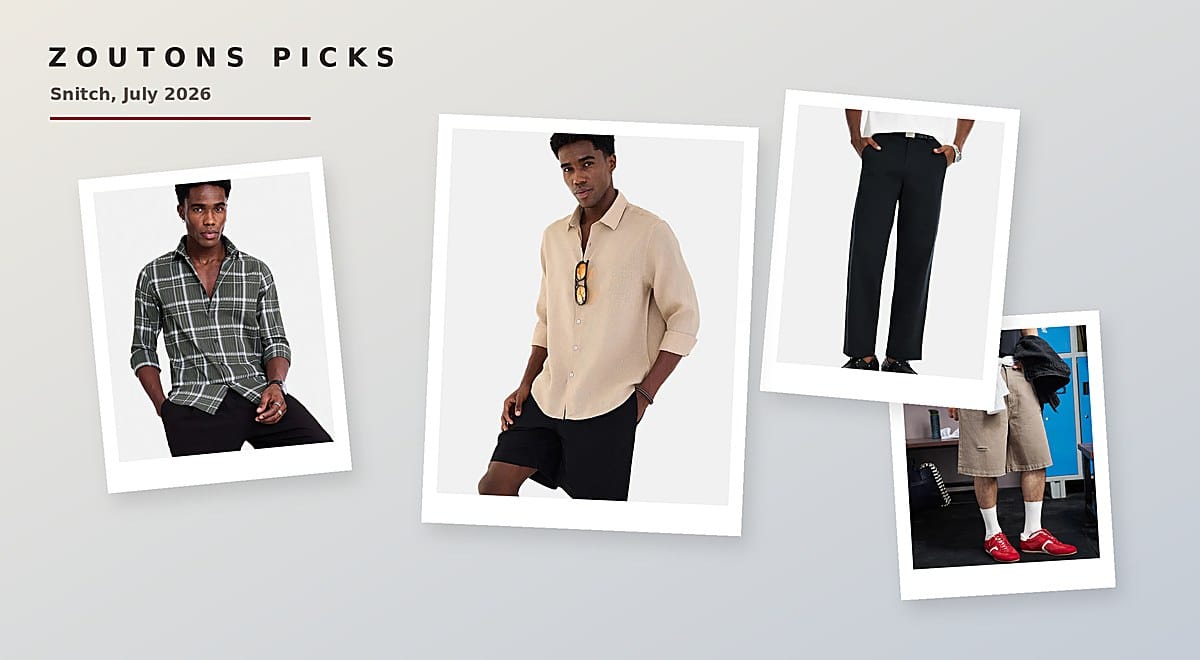
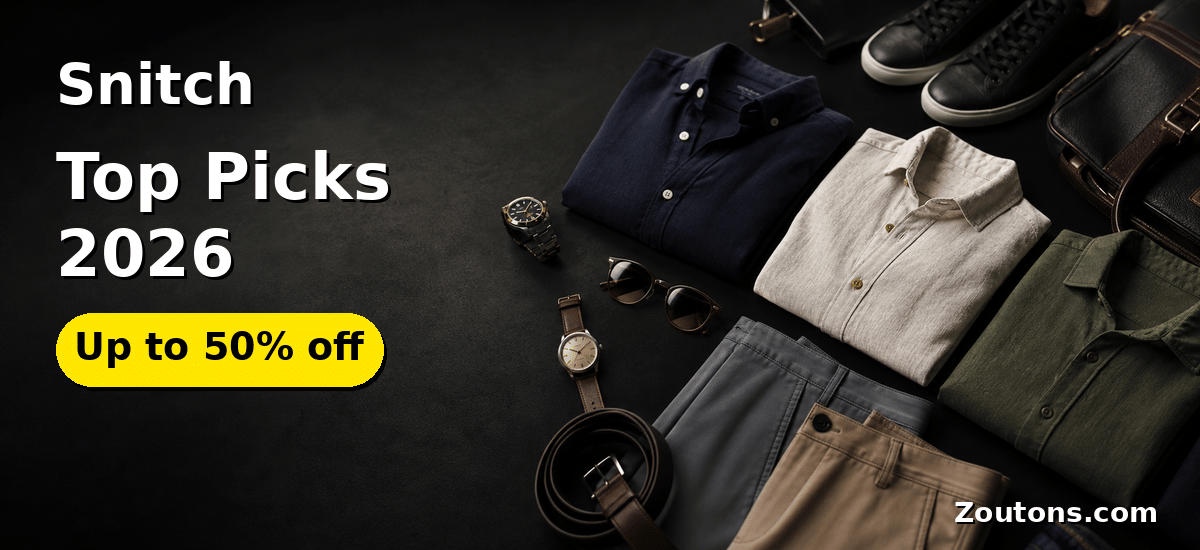
![Snitch menswear listings of the kind an account's order history is built from, shown as they appear in their own product photographs]()
Snitch's page headed Terms of service turns out to be its privacy policy, with one block added that the privacy page does not carry — and that block is written in the first person, as though you had signed it: "I hereby authorize and give consent to Snitch Apparels Private Limited to send me ... SMS messages, calls, commercial communications", to numbers that "may or may not be registered with the National Do Not Call Registry", and "I will not hold ASBL ... liable or file complaints under the ... (TRAI) Regulations, 2010".
We read both policy URLs first-party on 10 October 2026, logged out, in India, with nothing purchased. Below: the consent that "will be automatically renewed every month" and the Instagram DM that cancels it, the two retention sentences pointing different ways, the hashtags that turn a photo into marketing material, the sentence telling you not to expect privacy — and the one clause here that is better than Flipkart's and Vijay Sales'. Published text only; nothing here is legal advice.
Verbatim, from Snitch's own terms-of-service page
Read 10 October 2026 on snitch.co.in/policies/terms-of-service
"This consent will be automatically renewed every month. If you wish to discontinue this service, please send a direct message to Instagram before the due date"
📅 Update log:
10 October 2026 — First publication. Snitch's terms-of-service page read in full from snitch.co.in/policies/terms-of-service and compared line by line against snitch.co.in/policies/privacy-policy, both fetched the same morning: the Snitch Apparels Pvt. Ltd. ownership preamble shared by both URLs, the uploaded-images consent line, the external-links disclaimer, the fraudulent-activity and coupon-abuse clause, the consent-by-visiting clause and its list of processing purposes, the personalised-account clause covering contact information and bank details, the affiliates definition, the surveys and promotions clause, the search-engine access clause, the hashtag and user-generated-content clause, the third-party marketing visibility sentence, the first-person telecom consent block and its National Do Not Call Registry wording, the TRAI Regulations 2010 undertaking naming ASBL, the monthly auto-renewal sentence and its Instagram cancellation route, the login credentials clause, the security-measures paragraph, the Information Technology Act 2000 compliance statement, the cookies and session-cookie paragraphs, the tracking technologies paragraph, the material-change clause, the under-18 clause, the private and publicly-available information definitions, the Central/State Authority disclosure clause, the behavioural, demographic and indirect information paragraphs, the financial information clause, the sensitive-data exclusion naming biometrics and health records, the Facebook and Google login import clause, the advertising personalisation clause, the retention and account deletion paragraph with its confirmation email and audit repository copy, the consent-withdrawal clause, the 60-day discretionary deletion window, the non-personal information collection paragraph, the legal-purposes and fraud-protection sharing clauses, the do-not-expect-privacy sentence, the service-provider disclosure clause, the merger notification clause, the third-party links disclaimer, the access and privacy-enquiry routes, the retains-indefinitely sentence, the unsubscribe address, the published Bangalore address, and the capitalised change-without-intimation and payment-gateway security block. Both pages verified 10 October 2026.
The clause that is on the terms page and not the privacy page
Snitch publishes two policy URLs, and on 10 October 2026 both opened with the same sentence: "This policy applies to all the SNITCH platforms ... which is operated and owned by Snitch Apparels Pvt. Ltd." The page headed Terms of service carries the privacy policy text. What it also carries, and the privacy page does not, is a block written in the first person — as if you had signed it:
"I hereby authorize and give consent to Snitch Apparels Private Limited to send me, either directly or through any third-party service provider, various forms of information, alerts, SMS messages, calls, commercial communications, and other services to the telephone numbers listed above. I understand that these numbers may or may not be registered with the National Do Not Call Registry or listed in the National Customer Preference Register."
The second sentence is the one that matters: "I also confirm that I will not hold ASBL or its third-party service providers liable or file complaints under the Telecom Commercial Communications Customer Preference (TRAI) Regulations, 2010, or any other applicable regulations." In plain terms, the block asks a customer to agree not to complain to the telecom regulator about marketing calls or SMS. A consent that overrides a Do Not Call registration is lawful and routine — registered users give it to banks, insurers and retailers every day — and nothing here says Snitch has sent any message to anyone improperly. Whether an undertaking not to file a regulatory complaint is effective is a question for TRAI or a court and not for this page.
One detail is worth naming because a reader will trip over it: "ASBL" is not defined anywhere else on the page, and the operating company is named throughout as Snitch Apparels Pvt. Ltd. It reads like a term carried over from a template. That is an observation about drafting, and this page makes no claim about how it got there.
It renews every month, and you cancel it on Instagram
The sentence immediately after the consent is the one with the practical consequence: "This consent will be automatically renewed every month. If you wish to discontinue this service, please send a direct message to Instagram before the due date and call our support number at +916364430800, Whatsapp - +91 6366966283."
Three things follow. The consent is not one-off — it is described as renewing monthly rather than lapsing. There is a "due date" that the page does not identify, so a reader is told to act before a deadline that is not printed anywhere on it. And the cancellation route is a direct message on a social media account, with a phone call as the second step.
That channel is not unique to this clause. Account deletion: "If you wish to delete or close your account, please contact us at Instagram". Privacy enquiries: "In order to inquire about the privacy setting of your personal information with us, contact the relevant Officer/Authority on Instagram". For a brand whose customers live on the same platform, routing support through it is a deliberate and perfectly reasonable choice, and the page does publish a phone number, a WhatsApp number and a registered address at 1/1, St. Johns Church Road, Bhartinagar, Bangalore — 560005. The observation is narrower: a data right exercised by DM leaves the customer without the written trail that an email to a published address would create. There is one email address on the page, for unsubscribes, and it is printed as support@snitch.co.in.com — the extra ".com" is the page's own.
Two retention sentences, pointing different ways
The document says two things about how long data is kept, and they sit in different sections.
The first: "SNITCH retains indefinitely all the information we gather about you in an effort to make your repeat use of the Web Site more efficient, practical and relevant. You can delete your account from SNITCH's online database, at any time. This will remove all your personal details and bank account information with us."
The second: "SNITCH holds the discretionary right to delete the data after the period of 60 days from the date of deletion of your account. Thereafter, SNITCH may either delete your personal information or de-identify it so that it is anonymous and not attributed to your identity." The deletion paragraph adds that a confirmation email is sent, that "A repository copy of an email will be retained only for as long as SNITCH reasonably considers necessary for its audit and record purposes", that logs and statistical data that do not identify you are kept, and — honestly — that "If your personal information was previously accessed by others using our Sites, we are not able to delete the information or copies thereof from their systems."
Read together: data is retained indefinitely until you close the account, after which a 60-day discretionary window runs before deletion or de-identification. Retaining some records for audit and legal purposes is ordinary and frequently required. The two sentences are not contradictory once sequenced, but they are in different sections of a long page and the word "indefinitely" is the one a reader will remember. Withdrawing consent has its own consequence, stated plainly: "if you do withdraw your consent, you may not be able to use the relevant services and your account will be deleted."
| What the page covers | What Snitch's page states | Note |
|---|
| Telecom consent | "I hereby authorize ... SMS messages, calls, commercial communications" | First person |
| DND override | numbers "may or may not be registered with the National Do Not Call Registry" | Consent overrides |
| TRAI complaints | "I will not hold ASBL ... liable or file complaints under the ... (TRAI) Regulations, 2010" | Undefined entity |
| Consent duration | "automatically renewed every month" | No end date |
| Cancelling it | "send a direct message to Instagram before the due date" | Due date not stated |
| Account deletion | "please contact us at Instagram" | Plus phone and WhatsApp |
| Privacy enquiries | "contact the relevant Officer/Authority on Instagram" | No named officer |
| Retention | "retains indefinitely all the information we gather about you" | Until closure |
| After closure | "discretionary right to delete the data after the period of 60 days" | Or de-identify |
| Hashtags | posts tagged #snitch are "automatically" linked and "visible to anyone" | Opt-in by posting |
| Third-party marketing | "may enable third parties to see your personal information for marketing purposes" | Stated plainly |
| Privacy expectation | "we do not promise, and you should not expect, that your personal information ... will always remain private" | Unusually blunt |
| Merger | "we will notify you before transferring or disclosing your personal information" | Notice promised |
| Sensitive data | does not collect health records, biometrics, fingerprints, voice, facial patterns or DNA | Expressly excluded |
| Card data | "DO NOT STORE OR KEEP FINANCIAL DATA SUCH AS CREDIT CARD NUMBERS/PASSWORDS/PINS" | Stated plainly |
| Unsubscribe | requests to support@snitch.co.in.com, processed "within a reasonable time" | Address as printed |
| Under 18 | "not directed to children under the age of 18 years" | Standard |
| Policy changes | "WITHOUT ANY PRIOR INTIMATION TO YOU" | Capitals are the page's |
The hashtag clause, and the sentence about privacy
Two more passages are worth reading before you shop or post.
The hashtags. "SNITCH has certain hashtags such as #snitch #snitchit #DiscoverYourStyle which will be provided to you while you purchase a merchandize from SNITCH platforms. If you upload a picture on social media such as Facebook or Instagram using these hashtags, the SNITCH platforms will automatically link that picture to SNITCH platforms. The picture will be solely used for marketing and promotional purposes and shall be visible to anyone who uses the SNITCH platforms." User-generated content programmes of this kind are common across fashion retail and this one is disclosed rather than hidden, which is to its credit. The practical point is that the consent is given by typing a hashtag, not by ticking anything, and the same paragraph adds that "portions of your personal information may be made public for networking" and that Snitch "may enable third parties to see your personal information for marketing purposes".
The expectation-setting sentence. "Although we are committed to protecting your privacy, we do not promise, and you should not expect, that your personal information or private communications will always remain private. It may be shared to third parties as and when required." Most policies work hard to avoid writing that sentence. Writing it is arguably more honest than the alternative, and it is the single clearest statement of expectation on the page.
The change clause is in capitals and does not soften: "WE RESERVE THE RIGHT TO CHANGE THE TERMS AND PRIVACY POLICY FROM TIME TO TIME AS WE DEEM FIT, WITHOUT ANY PRIOR INTIMATION TO YOU. YOUR CONTINUED USE OF THE WEB SITE SIGNIFIES YOUR ACCEPTANCE OF ANY AMENDMENT." For what happens after an order rather than before one, see our reading of Snitch's return and refund policy, where COD refunds come back as store credit.
What the page gets right
Four things in this document are better than the category average, and two of them beat much larger retailers.
The merger clause promises notice first. "We transfer information about you if Snitch Apparels Pvt. Ltd. /SNITCH is acquired by or merged with another company. In this event, we will notify you before transferring or disclosing your personal information." Compare that with the equivalent clauses at Flipkart and Vijay Sales, which say data will be shared and promise the acquirer will follow the same policy — but promise no notice to the customer. Snitch's is the stronger term.
Sensitive categories are expressly excluded. The page states it does not collect "physical and mental or other health conditions or medical records and history; Biometric information such as fingerprints, voice & facial patterns and DNA". Few retail policies rule anything out by name. Card data is stated not to be stored at all — transactions run through a third-party gateway and "the personal account related information is not accessible to anyone at SNITCH". And the deletion paragraph is candid about its own limits: where data has already been accessed by others, "we are not able to delete the information or copies thereof from their systems", which is true and rarely admitted.
What is missing, by comparison: a named Grievance Officer with a designation and address under the Information Technology Act, a working email address for privacy requests rather than a social media handle, a stated turnaround for a deletion request, and a definition of "ASBL" and of the "due date" the consent clause refers to.
How to use this page
Five practical points, none of them legal advice. One: treat the telecom consent as live and recurring — the page says it renews monthly, so if you do not want calls and SMS, act rather than wait for it to lapse. Two: if you cancel it, do both steps the page lists — the DM and the call to +91 63644 30800 — and keep your own record of when you did, because neither channel gives you one. Three: do not use the brand hashtags on a photo you do not want used commercially; the page says tagged pictures are linked automatically and used for marketing. Four: closing your account starts a 60-day window, not an instant deletion, and logs and de-identified data survive it. Five: re-read the page occasionally — it reserves the right to change "WITHOUT ANY PRIOR INTIMATION". Everything above is Snitch's published text as it stood on 10 October 2026. This page describes published policy text and expresses no view on whether any clause is valid or enforceable; nothing here is legal advice.
Frequently Asked Questions
What does Snitch's terms page say about marketing calls and SMS?
It carries a first-person consent block. "I hereby authorize and give consent to Snitch Apparels Private Limited to send me, either directly or through any third-party service provider, various forms of information, alerts, SMS messages, calls, commercial communications, and other services to the telephone numbers listed above. I understand that these numbers may or may not be registered with the National Do Not Call Registry or listed in the National Customer Preference Register." It continues: "I also confirm that I will not hold ASBL or its third-party service providers liable or file complaints under the Telecom Commercial Communications Customer Preference (TRAI) Regulations, 2010." Consents of this kind are lawful and widely used, and nothing here alleges that any message was sent improperly; the notable features are that the block is written as if signed, and that "ASBL" is not defined anywhere on the page.
How do you stop Snitch marketing messages, and how long does the consent last?
The page says the consent does not expire on its own: "This consent will be automatically renewed every month. If you wish to discontinue this service, please send a direct message to Instagram before the due date and call our support number at +916364430800, Whatsapp - +91 6366966283." The "due date" is not stated anywhere on the page. Separately, for advertising emails, the page says unsubscribe requests "should be sent to us at support@snitch.co.in.com" — the extra ".com" is as printed — and will be processed "within a reasonable time after receipt". Snitch adds that it cannot remove your details from any third party's list and that you should contact those parties directly.
Can you delete your Snitch account and data?
Yes, and the route is a social media message. "If you wish to delete or close your account, please contact us at Instagram", with a phone number and WhatsApp number given alongside. The page says a confirmation email is sent once "your personal information and bank details have been deleted", but that "a repository copy of an email will be retained" for audit purposes, that logs and de-identified statistical data are kept, and that SNITCH "holds the discretionary right to delete the data after the period of 60 days from the date of deletion of your account". Before closure, the retention statement is that "SNITCH retains indefinitely all the information we gather about you". Keeping records for audit and legal purposes is ordinary practice.
What happens if you post a photo with the #snitch hashtag?
The page says it gets used. "SNITCH has certain hashtags such as #snitch #snitchit #DiscoverYourStyle which will be provided to you while you purchase a merchandize from SNITCH platforms. If you upload a picture on social media such as Facebook or Instagram using these hashtags, the SNITCH platforms will automatically link that picture to SNITCH platforms. The picture will be solely used for marketing and promotional purposes and shall be visible to anyone who uses the SNITCH platforms." User-generated content campaigns are common in fashion retail and this one is disclosed on the policy page rather than hidden, which is to its credit. The practical point is that the consent is given by typing a hashtag rather than by ticking a box.
Is Snitch's privacy policy different from its terms of service?
On 10 October 2026 the two URLs served substantially the same document. Both snitch.co.in/policies/privacy-policy and snitch.co.in/policies/terms-of-service open with "This policy applies to all the SNITCH platforms ... which is operated and owned by Snitch Apparels Pvt. Ltd." and run through the same collection, cookie, retention and sharing sections. The terms-of-service page carries one block the privacy page does not: the telecom consent and TRAI undertaking described above, together with a set of payment-partner offer conditions. How a merchant organises its policy pages is its own choice and nothing here suggests otherwise; the reason to say it is that a reader looking for Snitch's terms of sale — delivery, cancellation, liability — will not find them at that URL.
Prices & codes last verified: October 10, 2026
Zoutons may earn a commission when you buy through links on this page. Every quoted sentence, clause and detail here was read on 10 October 2026 from snitch.co.in/policies/terms-of-service and snitch.co.in/policies/privacy-policy, logged out, in India, with nothing purchased, no account created, no order placed, no consent given or withdrawn, no deletion request filed and customer service not contacted; quotations are reproduced verbatim from Snitch's own pages, including their own spelling, grammar, capitalisation, spacing, punctuation and the email address as printed, and any apparent error inside a quotation is the source page's rather than ours and is reproduced rather than corrected. The pages reserve the right to change "WITHOUT ANY PRIOR INTIMATION", so the text described here may already differ from the text that applies to you; the policy shown on Snitch's own site prevails over anything on this page. This page describes published policy text. It does not assess, and expresses no view on, whether any clause quoted above is valid, binding, fair or enforceable, whether a consent overriding a Do Not Call registration or an undertaking not to file a regulatory complaint would be upheld, or whether the pages comply with the Telecom Commercial Communications Customer Preference Regulations, the Digital Personal Data Protection Act, the Information Technology Act, the Consumer Protection Act or any rules made under them, all of which are matters for TRAI, a court, a regulator or the Data Protection Board and not for a shopping page; nothing on this page is legal, contractual or regulatory advice or a substitute for advice from a qualified professional. Reporting that a published page contains a telecom consent block, a TRAI undertaking, an auto-renewal sentence, a hashtag and user-generated-content clause, a retention clause, a deletion clause, a merger clause or a liability exclusion is a description of published text; obtaining customer consent to commercial communications, running a hashtag marketing programme, retaining records for audit and legal purposes, sharing data with service providers and transferring data in a corporate transaction are ordinary and lawful commercial practices, and no statement here alleges spam, unsolicited commercial communication, a data breach, a privacy violation, an unfair trade practice, an unfair contract term, a dark pattern, misleading advertising, deficiency in service or any breach of law, rule or guideline by Snitch Apparels Pvt. Ltd. or by any associated entity, officer or employee, and no wrongdoing is alleged or implied. In particular, nothing on this page asserts or implies that Snitch has sent any message to any person without consent, has contacted any number registered on the Do Not Call Registry improperly, has refused or delayed any deletion or unsubscribe request, has used any customer's photograph without the stated consent, or has suffered or concealed any data breach; the clauses described are drafting, and the page's stated protections — the notice-before-transfer merger term, the express exclusion of biometric and health data, the statement that card details are not stored and the published phone, WhatsApp and postal contacts — are recorded above. The observation that the acronym "ASBL" is not defined elsewhere on the page is a description of the published text and carries no suggestion about why it appears, about any entity of that or any similar name, or about any relationship between any such entity and Snitch. No product is assessed, tested, compared or recommended on this page and no price, discount or offer is stated here. Product photographs are listing images and may be styled or retouched; the products shown illustrate the kind of shopping account these pages concern, are not offers, and their prices are not stated. Policies and prices change without notice; the terms shown at your own checkout prevail over anything here.









 Booking com
  Hostinger
  Dell
Dell  Udemy
Udemy  Agoda
Agoda  Nykaa
Nykaa  Myntra
  Ajio
Ajio