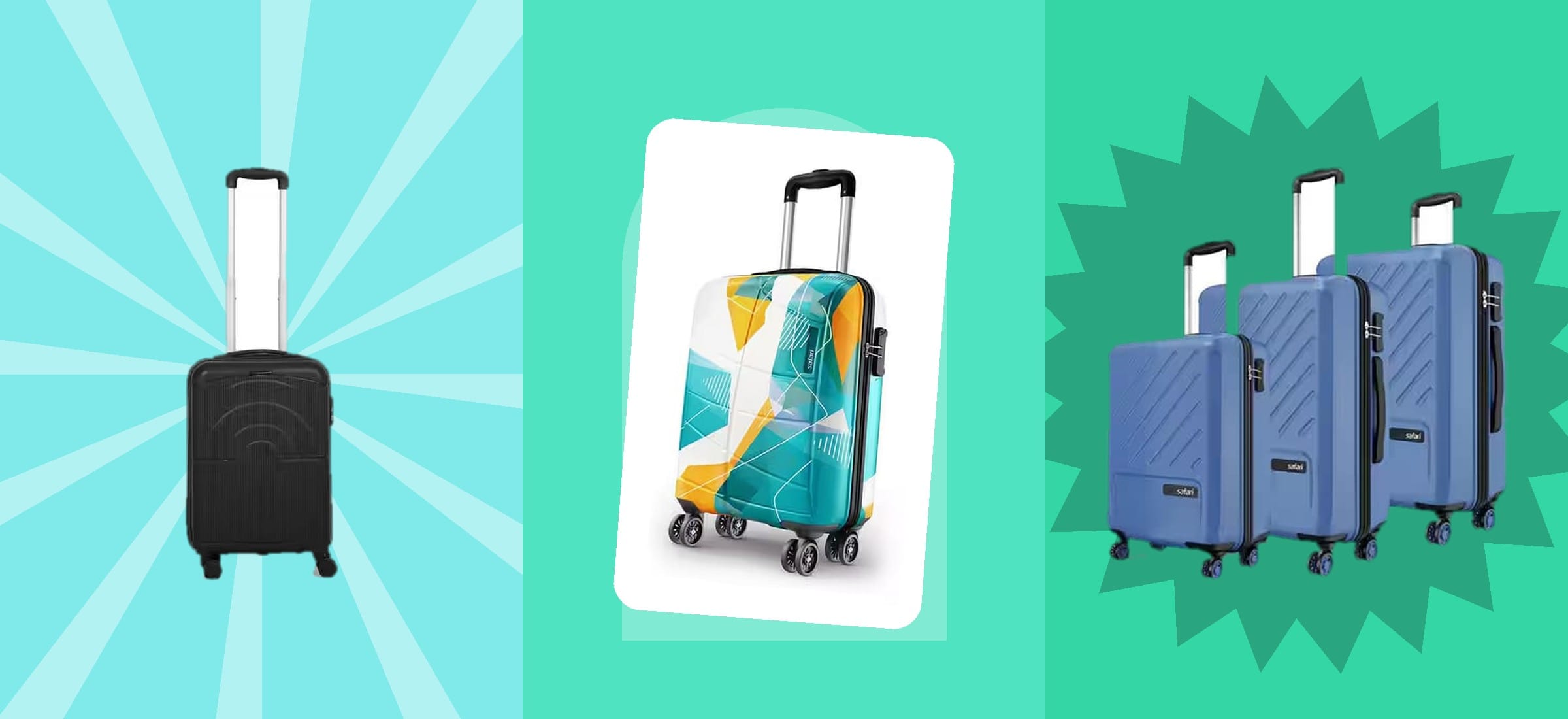
We read 220 AJIO luggage, trolley and travel-backpack listings on 24 August 2026 and seated 22, priced Rs. 1,174 to Rs. 28,000. The discount badge on this shelf belongs to the brand rather than the bag: TEAKWOOD LEATHERS, Nasher Miles, SAFARI and ARISTOCRAT carry median discounts of 76 to 80 per cent, while MOKOBARA sits at 51, Tommy Hilfiger at 54 and Decathlon at 21. The clearest illustration is a Benetton polycarbonate cabin case at Rs. 1,809 on a 60 per cent badge, which is within a few hundred rupees of the cases badged at 82 per cent - the deep badge and the honest one arrive at the same real price. Stated MRPs on the deep-discount brands run to seven times the selling price and we name that rather than call it a saving. Two other things matter here: a TSA-approved lock, the specification that decides whether security cuts your case open abroad, starts at Rs. 1,650; and not one of the 220 listings carries a rating or a review count, so no card on this page has a rating pill.
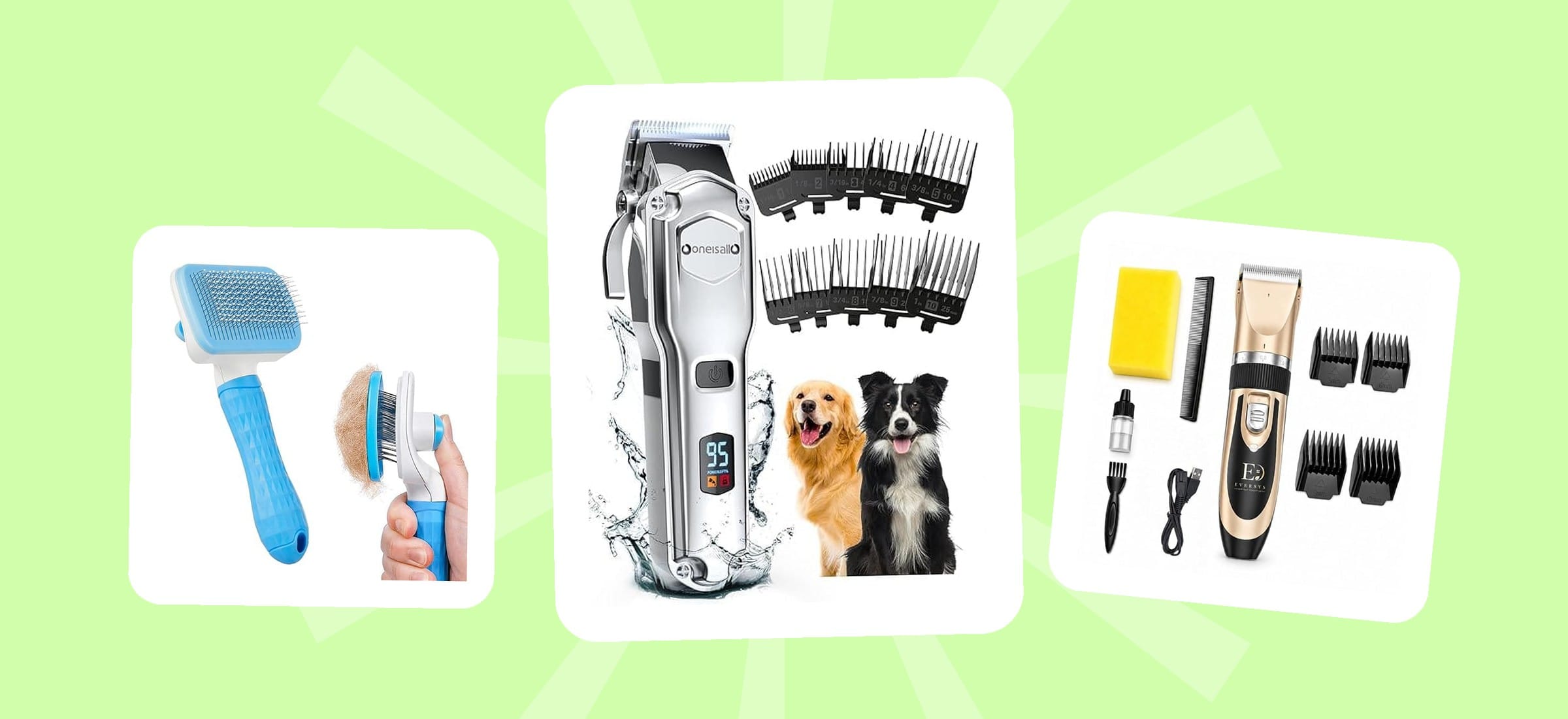
We read 144 Amazon pet listings on 24 August 2026 across dog food, cat food and pet grooming, and seated the 23 grooming products that survived filtering, priced Rs. 106 to Rs. 16,890. This is an unusually well-evidenced shelf: every seated listing carries at least 58 reviews and several carry thousands, including 19,828 on one clipper for thick coats, 2,997 on a paw trimmer and 2,594 on a Rs. 649 trimmer kit rated 4.5. That makes the ratings genuinely usable here, and it exposes the shelf's weakest products - two kits sell at an identical Rs. 649 and are rated 3.4 from 97 people and 4.5 from 2,594. The multi-piece kit format dominates the cheap half and the piece count is marketing: four sets between Rs. 270 and Rs. 299 have nothing published to separate them, and a Rs. 179 Amazon Basics slicker brush with 2,020 reviews does the job most owners actually need. Food was excluded: Amazon's per-unit pricing put a Rs. 25 stated MRP against a Rs. 770 pack of dog food.
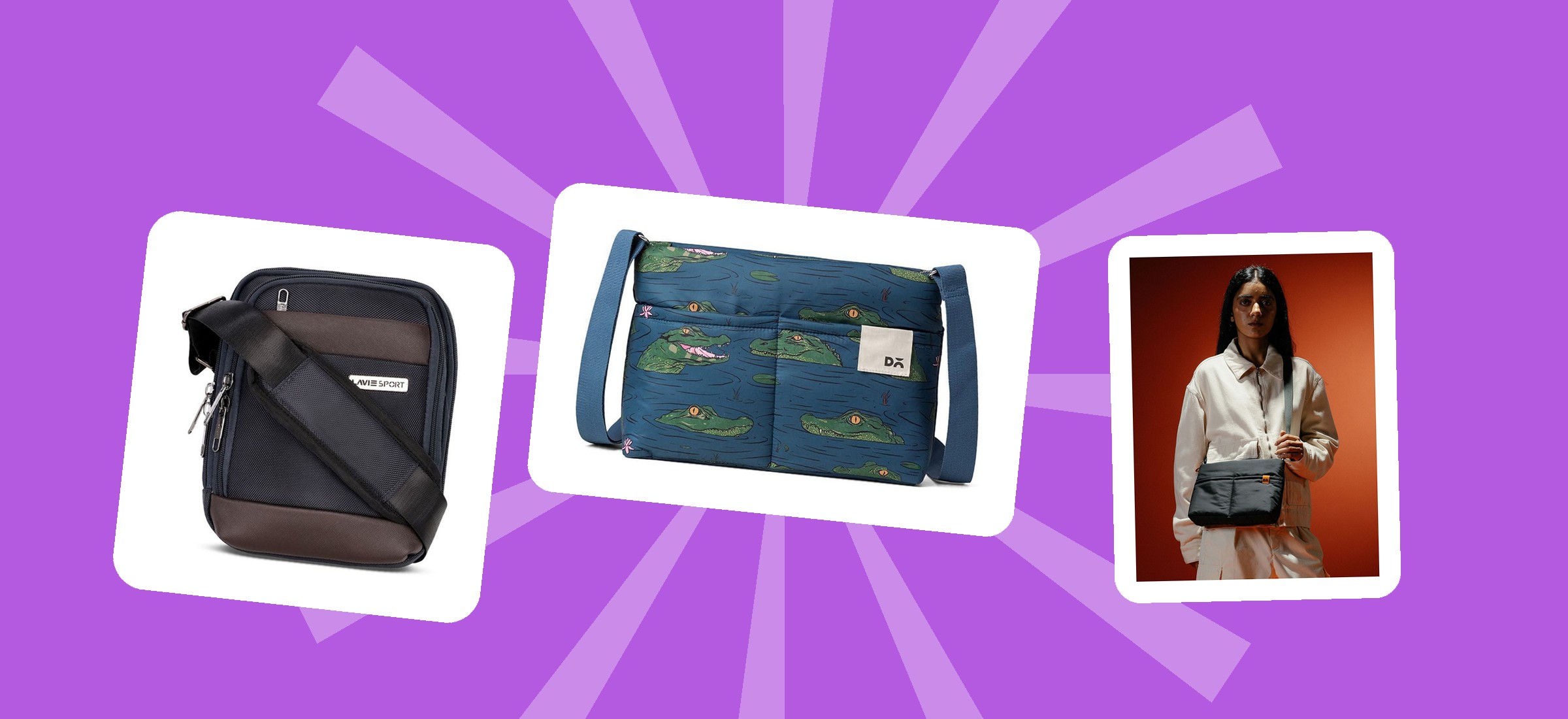
We read Myntra's handbag shelf on 24 August 2026 from the store's own listing data, across handbags pages one to three plus women-handbags, and seated 19 slings, totes and crossbodies priced Rs. 549 to Rs. 1,499 after removing duplicates on product id, photograph and rating count. The two deepest badges in the read - 81 per cent on a bagneeds handheld and 80 per cent on a SPOTIC crossbody - are the only two listings claiming an MRP above Rs. 2,800, at Rs. 4,999 and Rs. 4,599; both bags sell for about Rs. 930, and the 81 per cent one has no published rating at all. Eight of the nineteen are unrated. The best-rated bag on the page, a DailyObjects Carbon Black Retreat crossbody at 4.7 from 164 ratings, carries a 52 per cent badge; the uppercase sling takes 20 per cent off a stated Rs. 1,500, and the Converse sling at Rs. 1,499 takes nothing off at all. Every price, MRP, rating and count here is Myntra's.
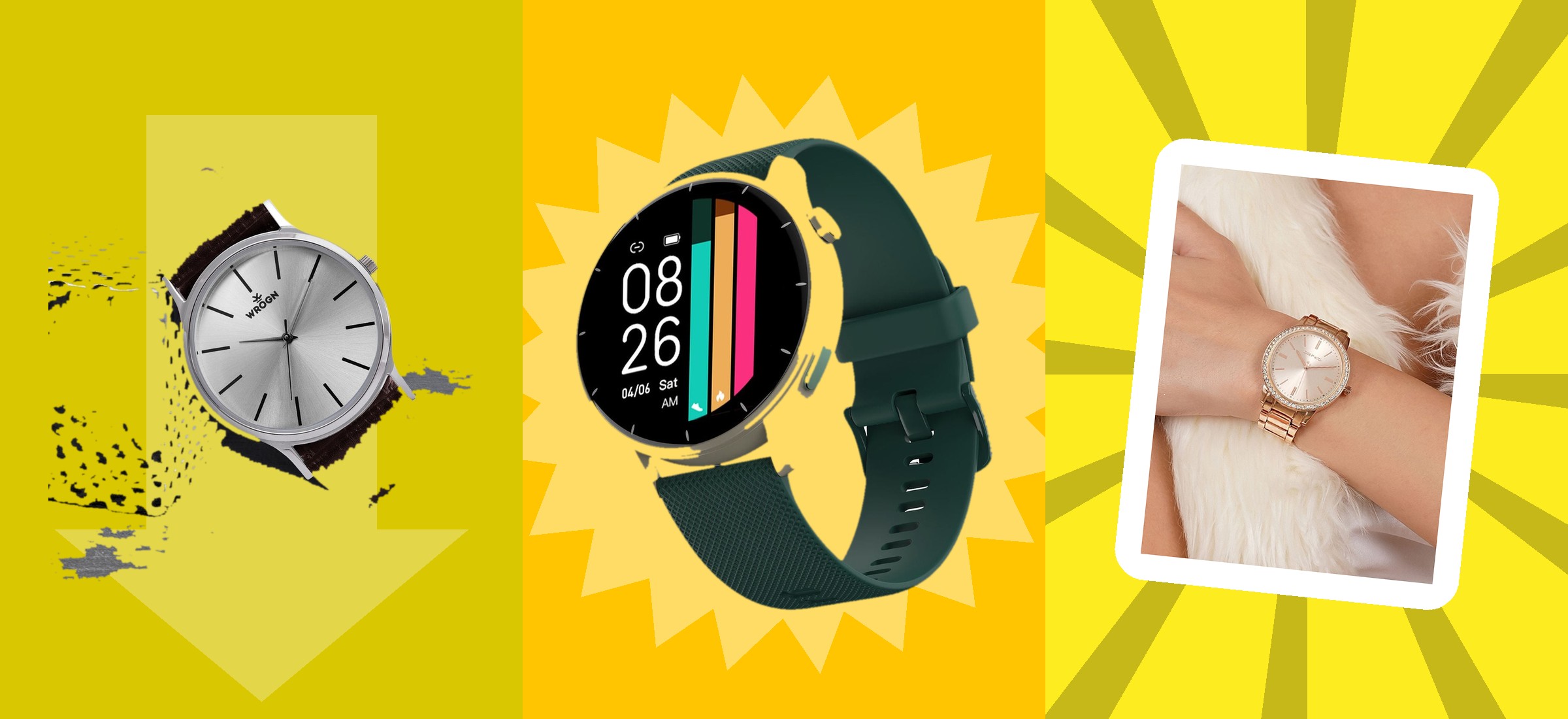
We read Myntra's watch shelf on 24 August 2026 from the store's own listing data, across the watches, men-watches and women-watches pages, and seated 24 listings priced Rs. 278 to Rs. 1,999. The split on this shelf is unusually clean. Titan's two labels - Fastrack and Sonata - sell at 0, 0, 0, 6, 15 and 43 per cent off their stated MRPs, because those MRPs have to hold in company-owned shops; eighteen listings in the full pull are badged zero. The marketplace labels beside them claim 80, 83 and 85 per cent off list prices of Rs. 4,799 to Rs. 7,999. Twelve rupees apart sit a JOKER & WITCH watch badged 85 per cent off Rs. 6,499 and a Sonata Sf Hexa at Rs. 999 off a stated Rs. 999 - and the Sonata is the best-rated watch on the page, 4.6 from 1,048 people. Myntra also pools rating counts by brand, so DressBerry's 55,425 describes a label rather than a watch. Every figure here is Myntra's own.
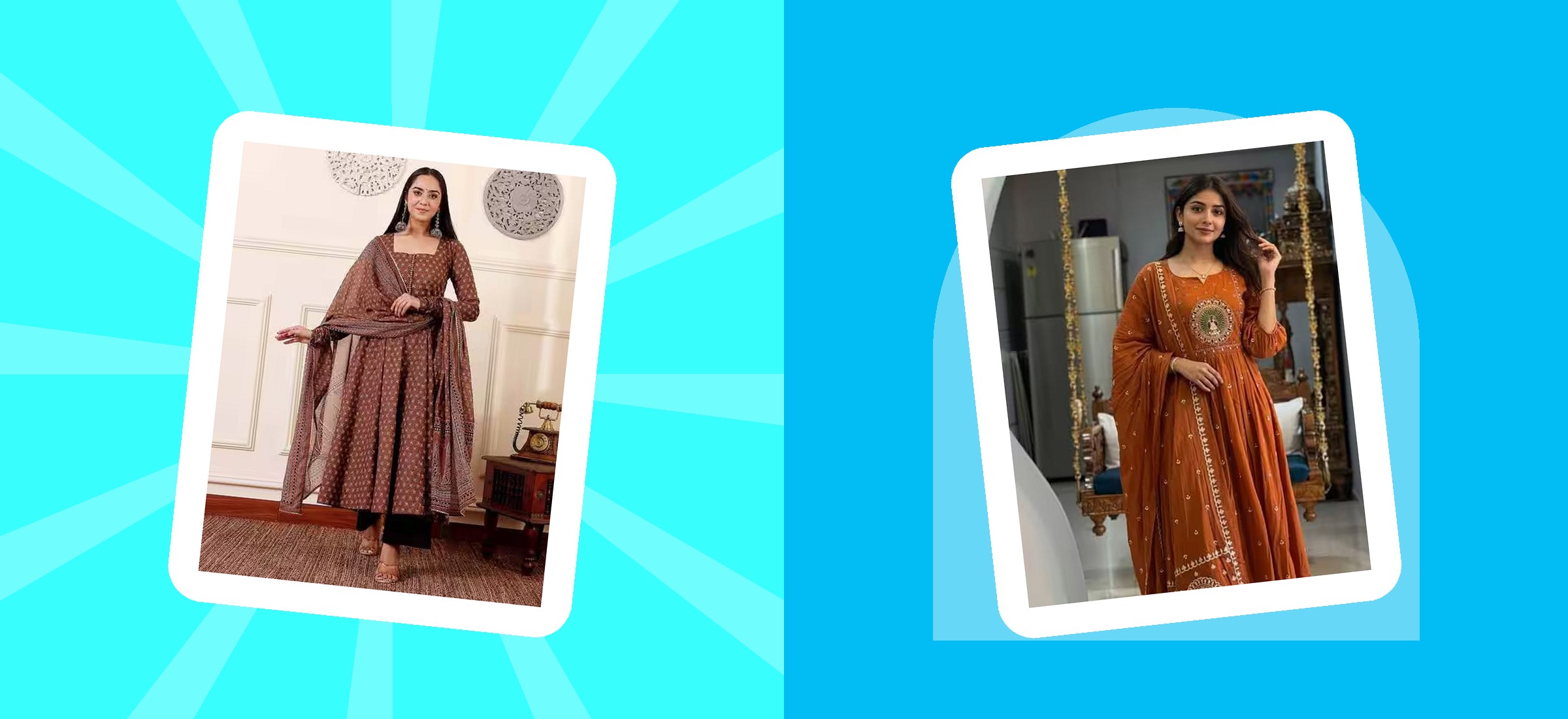
We read AJIO's women's kurta shelf on 24 August 2026 from the store's own catalogue across three queries, and seated 22 kurtas and kurta sets priced Rs. 150 to Rs. 919. The first thing to know is what is missing: not one of the 74 listings in the read carries a rating, a review count or a star average, so the discount badge is the only number a shopper is handed - and it is the one worth least. The badges split by whether a label has shops. AVAASA, Reliance Trends' own brand with nineteen listings here, prices to exactly two tiers, 49 and 75 per cent, off MRPs of Rs. 499 to Rs. 1,499; MAX takes 14 and 17 per cent off Rs. 599 and Rs. 699. Every badge above 78 per cent belongs to a label that exists only as listings, and GOSRIKI states the identical Rs. 4,345 MRP on two different garments selling at Rs. 499 and Rs. 849. Every price and MRP on this page is AJIO's own, read on the day.
We read both kurta shelves on 24 August 2026 - 74 listings on AJIO and 108 women's listings on Myntra, each carrying a price and a stated MRP - and the two stores are far closer on price than on evidence. Under Rs. 1,000, AJIO's median is Rs. 509 against Myntra's Rs. 567, and AJIO's cheapest kurta is Rs. 150 against Myntra's Rs. 307. But 67 of Myntra's 85 sub-Rs. 1,000 listings carry a published rating - the largest from 43,521 buyers - while not one of AJIO's 74 carries a rating, a review count or a fabric composition. The sharpest illustration of why the discount badge is useless on either store is GoSriKi, a label selling on both: six of its garments across the two shelves state an MRP of exactly Rs. 4,345 while selling at Rs. 499, Rs. 825, Rs. 849, Rs. 999, Rs. 1,090 and Rs. 1,149, with badges from 89 per cent down to 74. AJIO wins on price floor and complete sets; Myntra wins on everything you can check.
We read Myntra's men's shirt shelf on 23 August 2026 from the store's own listing data, across men-casual-shirts pages one to four and men-shirts pages one to three, and seated 24 listings priced Rs. 405 to Rs. 999 after removing duplicates on product id and photograph. Seven of the 24 have no published rating whatsoever - and they hold three of the four largest discount badges on the page, at 80, 80 and 79 per cent. Only two listings in the entire read state an MRP below Rs. 1,000; five state exactly Rs. 1,999 and sell at Rs. 405, Rs. 429, Rs. 498, Rs. 553 and Rs. 711. The sharpest illustration is two Roadster shirts priced identically at Rs. 553, one badged 72 per cent and the other 45, because they are measured against different claimed MRPs. Myntra also pools rating counts across a label's catalogue rather than per garment - HIGHLANDER returns 2,23,531 - so we seated one listing per pool and say so on every card.
We read 79 Myntra women's kurta and kurta-set listings on 23 August 2026 and seated 24 priced Rs. 354 to Rs. 1,149, after de-duplicating on productId and on the listing photograph. Three things define this shelf. First, six listings state exactly the same MRP - Rs. 4,345 - across two brands (GoSriKi and SZN) and six different garments selling between Rs. 825 and Rs. 999; five more state Rs. 2,199 on kurtas from Rs. 405 to Rs. 1,001, and eight state Rs. 2,999. Second, the discount badge tracks that MRP field rather than the garment: the cheapest kurta here, at Rs. 354, claims Rs. 999 and shows 65 per cent, while a Rs. 718 Varanga claims Rs. 4,599 and shows 84. Third, Myntra pools rating counts across a label's catalogue - FLOWERVELLY shows 14,010 on two listings, Rimeline 836 on two - so we print the count beside every score. Half the listings here are two- or three-piece sets, which changes the per-garment maths considerably.
We read 152 Nykaa Fashion women's listings on 23 August 2026 from the store's own category feed and seated 24 priced Rs. 307 to Rs. 1,088, after de-duplicating on the listing photograph. Three things define this shelf. First, the house label prices differently from its own marketplace: Twenty Dresses by Nykaa Fashion returned 15 listings and 14 are cut by exactly 30, 32 or 35 per cent, a median of 32, while every other brand in the pull has a median of 47 and a range from 5 per cent (Outzidr) to 81 (MYSHKA). Second, Nykaa Fashion publishes no rating and no review count for any of the 152 listings, so this page carries no rating pills and every judgement on it rests on price, stated MRP, brand behaviour and the stated fibre. Third, colourway repetition inflates the shelf: seven of the house label's 15 listings are one puff-sleeve dress in seven colours, four PIMU listings are one dress at Rs. 1,000, and three Blissclub sweatpants are one garment. We seated one of each.
We read both stores on the same day - 79 Myntra women's kurta and kurta-set listings and 152 Nykaa Fashion women's listings on 23 August 2026, each from the store's own product feed - and compared how they build the numbers they show you. Myntra publishes a rating on effectively every listing but pools the counts across a brand's catalogue in several cases we identified by name, and shares one stated MRP across garments: Rs. 4,345 appears on six listings from two brands, Rs. 2,999 on eight. Its badges run 43 to 84 per cent. Nykaa Fashion publishes no rating on any of its 152 listings, and its badges run 5 to 81 per cent - with the smallest belonging to brands that sell through their own shops and to its house label, Twenty Dresses, which cuts a flat 30 to 35 per cent on 14 of 15 listings. Both shelves inflate choice with colourways. On neither store is the percentage worth reading.
We read Myntra's own listing data across women-tops and a women's T-shirt search on 22 August 2026, which returned 68 listings carrying a live price and a stated MRP, and seated 22 of them - one per brand, all under Rs. 1,000. Those 68 listings carry 53 distinct selling prices and only 22 distinct MRPs: Rs. 999 is stated behind fourteen of them, Rs. 1,499 behind six, Rs. 899 behind six and Rs. 1,199 behind five. The price field is doing real work; the MRP field is a short menu of round numbers reused across unrelated sellers. The second finding is who refuses to join in. Fifty-eight of the 66 discounted listings are 60 per cent off or more, and the exceptions are almost all one brand: H&M publishes a 26 per cent badge on one T-shirt and no discount at all on another, while Marks & Spencer states Rs. 799 against a price of Rs. 799. The two biggest badges - 87 and 85 per cent - sit on ordinary prices of Rs. 316 and Rs. 376.
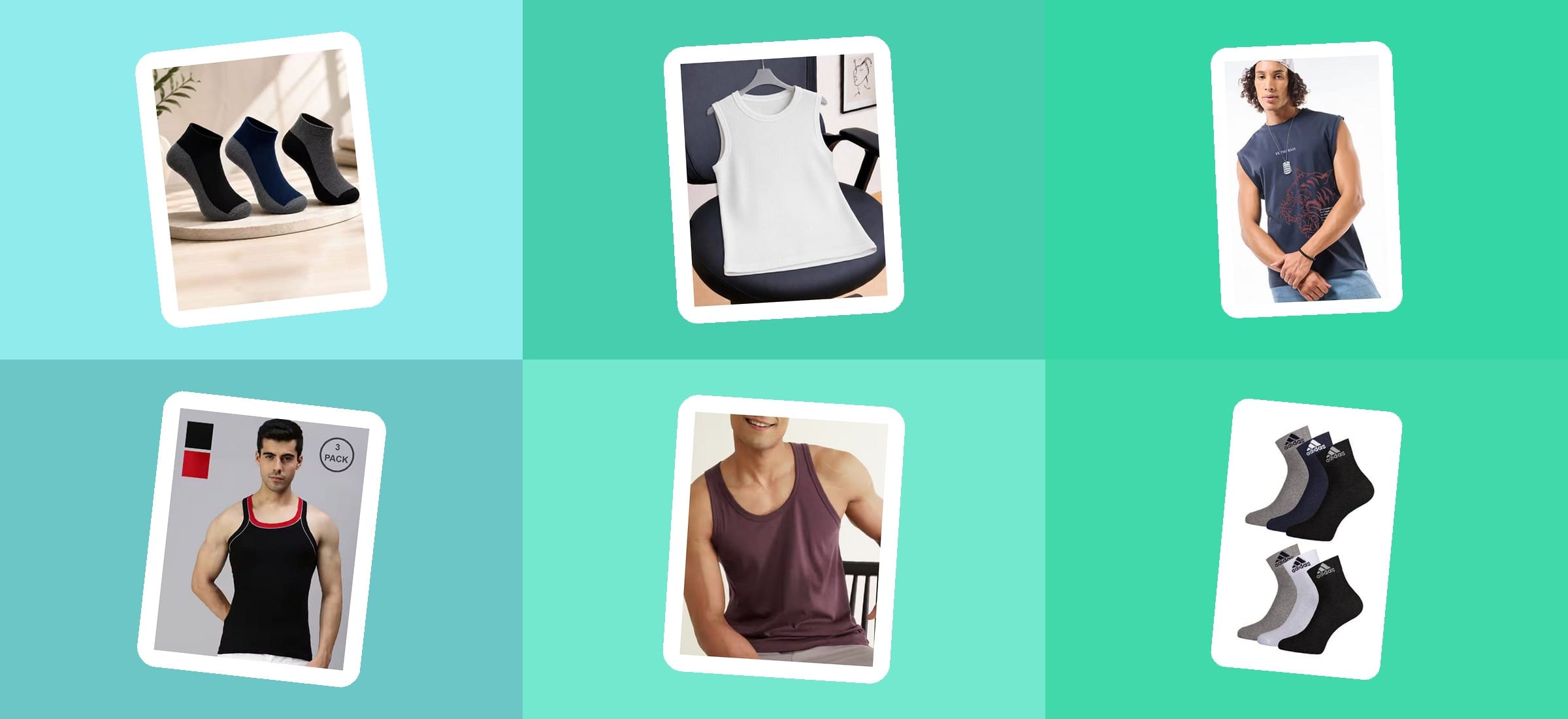
We read 97 listings from AJIO's own search API on 22 August 2026 across men socks, men innerwear and men vest, and seated 24 of them - one per brand, priced Rs. 49 to Rs. 850. Three things stand out. First, AJIO published no rating and no rating count for any of the 97 listings, so there is no crowd to consult anywhere on this shelf. Second, the discount badge sorts brands rather than products: every listing above 60 per cent off belongs to a label with no presence outside this catalogue - USOXO at 93, XQsee at 88, HEBTROCO and Asthamoxi at 83 - while every national name sits under 50, from LUX COZI at 5 per cent through adidas and Jack & Jones at 20 to Dollar at 47. Third, half the shelf is multipacks, so the listed price is not comparable at all. Per piece, socks run Rs. 23 to Rs. 133 a pair and briefs Rs. 74 to Rs. 349 - and the badge inverts the answer: the cheapest brief per piece shows 45 per cent off, the dearest shows 68.
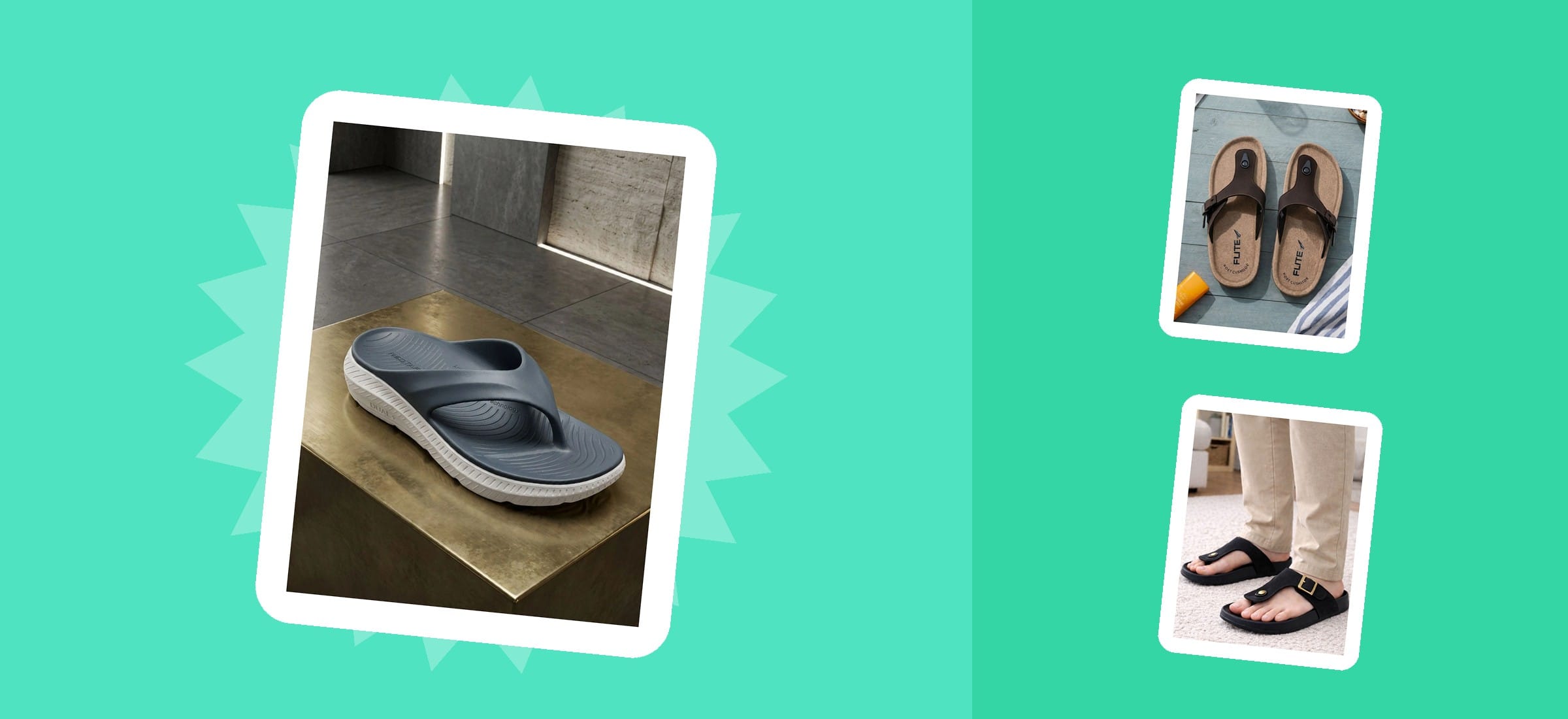
We read Myntra's own listing data across three footwear paths on 21 August 2026 - men-flip-flops, women-flip-flops and men-sandals - which returned 96 listings carrying a live price, and seated 22 of them, one per brand, all under Rs. 1,000. A moulded rubber flip-flop is about as standardised an object as a marketplace sells, and the prices reflect that: everything here costs between Rs. 239 and Rs. 913, a spread of under four times. The stated MRPs behind those prices do not. They run from Rs. 399 to Rs. 4,999. Four unrelated brands - JOOTIYAPA, COGS, Paragon and VOKLINE - all state exactly Rs. 999, producing badges of 66, 64, 54 and 50 per cent for what is functionally the same product. Three listings cost exactly Rs. 499 and claim 50, 67 and 72 per cent off. Meanwhile the smallest badge in the read, FLITE's 12 per cent, sits on the highest-rated pair on the page, and the largest, Mast & Harbour's 88 per cent, sits behind a Rs. 4,999 claim on a Rs. 585 sandal.
We read Amazon India's own search listings across four queries on 21 August 2026 - office chair, ergonomic office chair, study chair and revolving chair - which returned 160 rows and 134 unique ASINs carrying both a price and a stated MRP. Twenty-two selling under Rs. 10,000 are seated here. The finding that shapes the page: the CELLBELL C190 Berlin sells at Rs. 5,498 under two separate listings which share a rating pool of 3,409 at 4.2 and state MRPs of Rs. 12,999 and Rs. 19,999 - badges of 58 and 73 per cent for the same chair at the same money, verified on two scrapes an hour apart. It is not isolated. The ROSE Elite appears twice at Rs. 3,333 stating Rs. 9,500 and Rs. 10,500. Green Soul sells the Seoul X and the Pebble at an identical Rs. 3,790 while stating Rs. 5,980 and Rs. 7,990. Three unrelated brands all state exactly Rs. 9,999. Underneath the arithmetic the real price drivers are back height, tilt mechanism and back material, and we have named all three on every card.
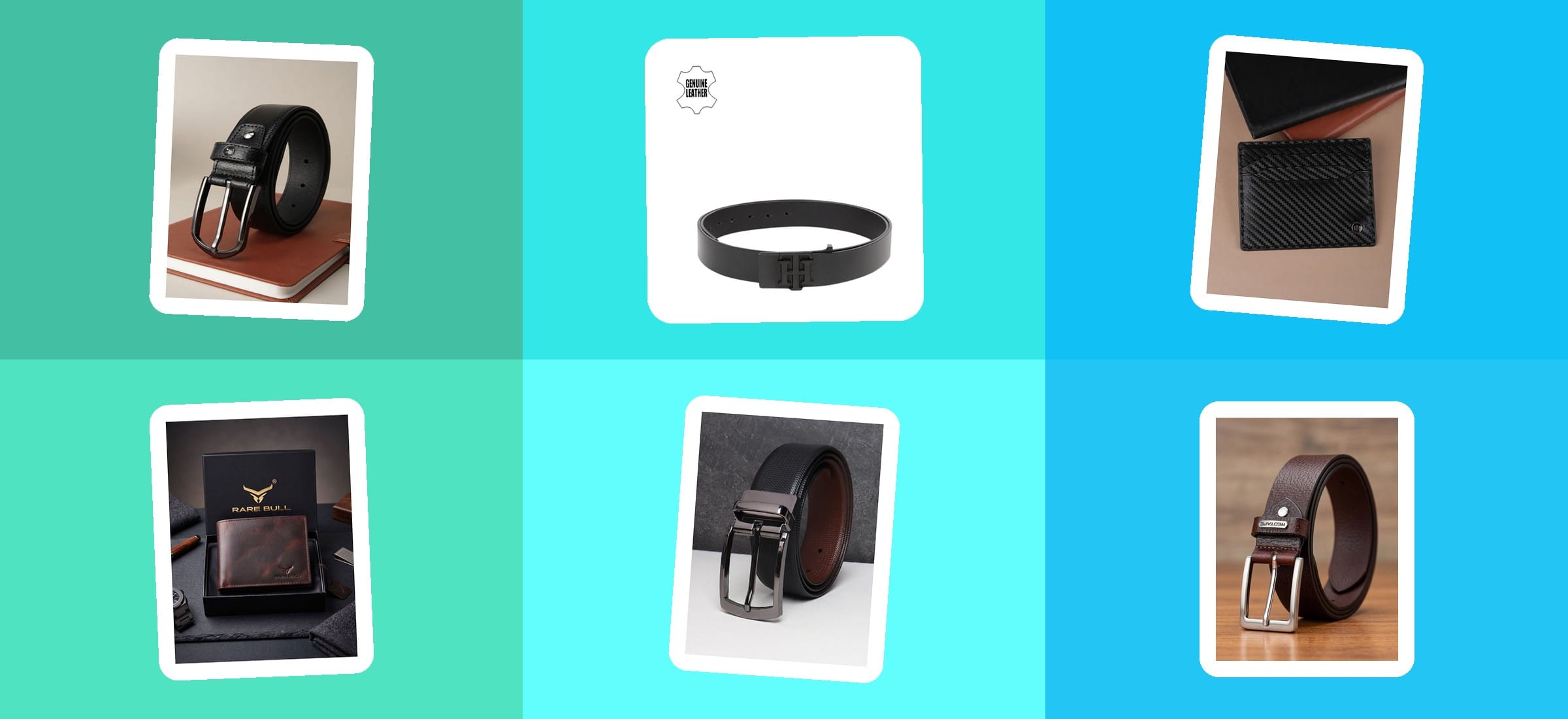
We read both accessory shelves on the same morning, 21 August 2026 - 64 men's belt and wallet listings from Myntra's own listing data and 155 from AJIO's own search API. On Myntra the discount is a brand-level constant: all seven Van Heusen belts show exactly 55 per cent off across three different prices and three different MRPs, both Louis Philippe belts show 55, all four Louis Philippe wallets show 41, and both Marks & Spencer belts show 50. The same brands on AJIO do nothing of the kind - Van Heusen's fifteen belts there carry eight different badges between 43 and 69 per cent, and Louis Philippe's seven run 21 to 49. What AJIO fixes instead is its own house label: all seven NETPLAY wallets show exactly 70 per cent. Below Rs. 650 both shelves behave the same way, with unfamiliar sellers claiming 70 to 88 per cent against MRPs up to eight times their price and mostly carrying no ratings at all.